CNC Reciprocating Electric Submersible Oil Pump (RESP)
The CNC Reciprocating Electric Submersible Oil Pump (RESP) marks a significant advancement in oil extraction technology, fundamentally transforming traditional methods that have been in use for over a century. This revolutionary system operates with minimal surface equipment, requiring only a wellhead and control cabinet, occupying just 5 square meters and weighing one ton—a stark contrast to conventional beam pumping units. By eliminating contact with the external environment, the RESP integrates directly into the pipeline network, ensuring environmental protection throughout the extraction process.
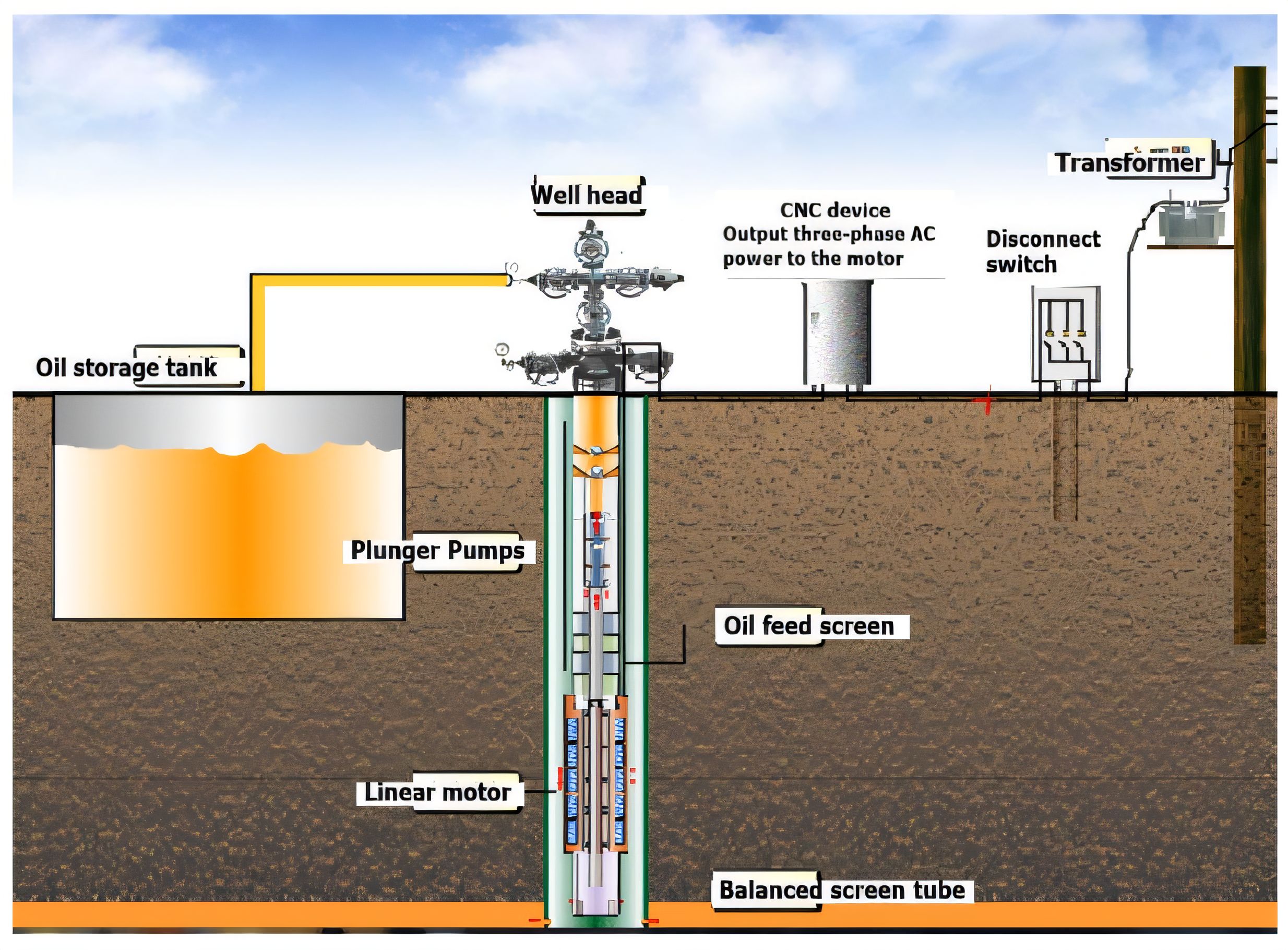
Unlike traditional pumping systems, the RESP employs a linear motor combined with a plunger pump, which is designed without bearings and seals to enhance durability and reduce maintenance needs, allowing for extended operational lifespans exceeding 10 years. It features advanced control mechanisms that facilitate remote monitoring and troubleshooting, significantly lowering energy consumption—up to 60% less than traditional systems—while effectively handling challenges such as thick oil and wax formations with innovative heating technology. The RESP has been deployed across over 1,000 oilfields in China, achieving average inspection cycles of 600-800 days and recognized for reducing oil recovery costs by more than 30%, making it a pioneering solution for modern oil production.
Advantages of Linear Motor Product Structure
The linear motor in the CNC Reciprocating Electric Submersible Oil Pump (RESP) features a design that eliminates the need for bearings and seals between its stator and movable components. This innovative approach creates a friction pair between the outer surface of the movable iron ring and the inner support guide bushing of the stator, allowing for efficient up-and-down movement that drives the plunger of the plunger pump to lift oil to the surface. This structure not only enhances reliability but also extends the product’s life to over 10 years, with inspection cycles spanning 1 to 3 years.
Key Components of the Linear Motor:
Stator
Composed of a seamless steel tube jacket, integrated silicon steel sheets, coil windings, and a fully sealed inner bushing.
Movers
Consist of a magnetic ring and iron ring.
On-Site Control
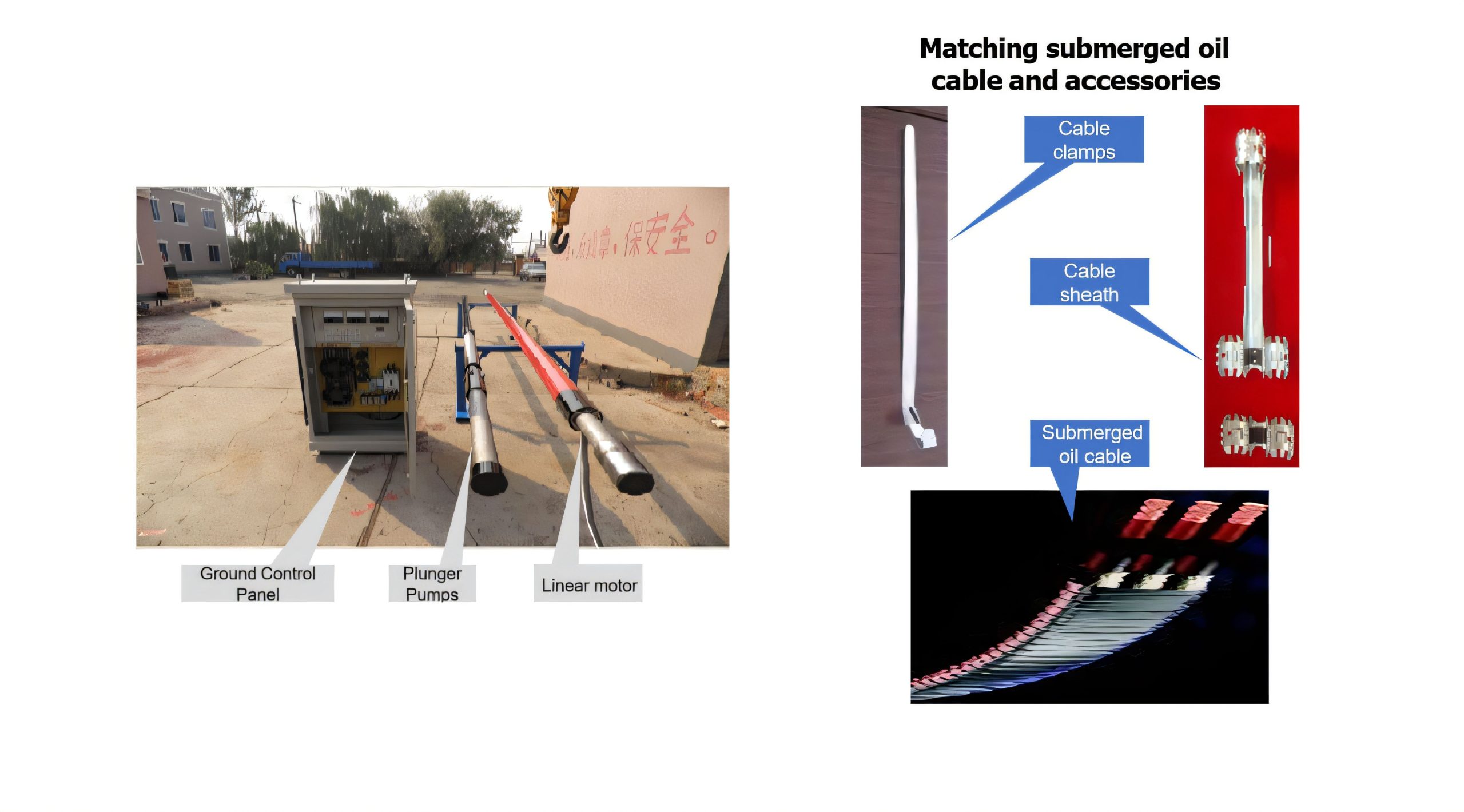
The on-site control system allows operators to adjust the working state of the CNC reciprocating electric submersible oil pump (RESP) within a reasonable range using buttons located in the ground control cabinet. This enables users to modify various parameters directly and efficiently.
Remote Monitoring
Incorporating a remote monitoring system enhances the operational capabilities of the RESP by enabling remote monitoring and control. This system utilizes big data analysis through a server to reflect the real-time operational status of the equipment. It facilitates timely fault prediction and troubleshooting, thus enabling a fully automated oil recovery management mode. Users can monitor working statuses and control operational parameters such as stroke and frequency remotely. This level of automation significantly reduces the need for on-site maintenance while allowing technicians to intervene only when abnormalities are detected, thereby optimizing operational efficiency and enhancing overall productivity.
A few things we’re great at
Lorem ipsum dolor sit amet, at mei dolore tritani repudiandae. In his nemore temporibus consequuntur, vim ad prima vivendum consetetur.
Plunger Suction Pump
The RESP employs a plunger suction pump fixed above, utilizing upward movement to operate similarly to conventional piston pumps while improving operational efficiency.
On-Site Control
The on-site control system allows operators to adjust the working state of the CNC reciprocating electric submersible oil pump (RESP) within a reasonable range using buttons located in the ground control cabinet. This enables users to modify various parameters directly and efficiently.
Ground Control System
The ground control system manages the linear motor’s operations, utilizing frequency conversion control to adjust stroke, speed, and operational parameters. It features self-diagnostic capabilities for troubleshooting and can be equipped with remote monitoring tools for real-time data analysis and fault prediction. This system is designed for ease of maintenance, requiring only basic training for ordinary electricians. Moreover, the RESP is capable of operating in extreme environments, from -40°C to +45°C, and has been tested in harsh conditions, such as the Daqing cold region and Xinjiang Flaming Mountain area, demonstrating its durability and effectiveness. The simple design reduces the maintenance workload, allowing for a modern, unattended approach to oil production.
Remote Monitoring
Incorporating a remote monitoring system enhances the operational capabilities of the RESP by enabling remote monitoring and control. This system utilizes big data analysis through a server to reflect the real-time operational status of the equipment. It facilitates timely fault prediction and troubleshooting, thus enabling a fully automated oil recovery management mode. Users can monitor working statuses and control operational parameters such as stroke and frequency remotely. This level of automation significantly reduces the need for on-site maintenance while allowing technicians to intervene only when abnormalities are detected, thereby optimizing operational efficiency and enhancing overall productivity.
Thick Oil and Wax Formation Solutions
In addressing the challenges posed by thick oil and severe wax formation in wells, conventional solutions such as hot washing (at temperatures ≤ 90°C), chemical wax removers, and old heating cables are often employed. However, our innovative approach utilizes a low power consumption 3-conductor heating cable developed in-house. This heating cable forms a self-loop using three conductors housed within a metal tube, eliminating any joints with the tubular column. The cable is directly inserted into the oil tube, allowing for precise control over temperature, power, and heating duration to cater to specific heating requirements.
This advanced heating solution significantly enhances efficiency, consuming only one-third of the electricity compared to traditional heating cables, thus effectively meeting the energy demands in oilfields. By ensuring optimal heating, it resolves the difficulties associated with extracting oil from thick or waxy formations.
Since its initial deployment in 2005, over 1,000 units of this technology have been successfully implemented in various Chinese oilfields, including Daqing, Jilin, Liaohe, Dagang, Shengli, Henan, Changqing, Yanchang, North China, Hainan, and Xinjiang. The RESP has demonstrated an average maintenance-free operational period of 600 to 800 days, with some units functioning for over 1,800 days without issues. Notably, the Daqing Oilfield’s Eighth Oil Production Plant replaced over one hundred units of traditional swimming beam oil recovery machines with the RESP, establishing a model for advanced oil recovery that has reduced operational costs by more than 30% for users.